Dismissed, deserted and disregarded: my experience of allergies in school
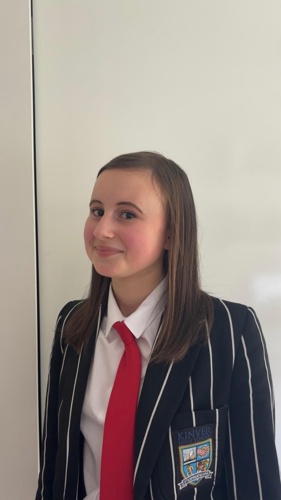
Sienna Calleja is a Year 11 student at Kinver High School in South Staffordshire who joined the NGA team for a week of work experience. Here, she shares her thoughts and experiences as a pupil affected by allergies.

There are thousands of children and young people dealing with severe allergies in school, including me. We are unsure if our friends and teachers know what is safe to eat around us, whether they understand the potential consequences of a mistake, and if anyone really cares about our needs. We feel like this because schools give very little advice to all pupils on what it means to have an allergy and the safety requirements.
But there are some big changes happening. In England, schools must now have a whole school allergy policy, provide staff allergy awareness training, hold spare adrenaline auto injectors (AAIs), and create Individual Healthcare Plans (IHPs) for pupils with allergies, as required by new statutory guidance published in July 2026. Staff members are made aware of this, but perhaps not the pupils who (whether they are known to have an allergy or are a friend of a sufferer) are much more likely to eat or offer food without knowing its specific ingredients and associated consequences.
The impact of Benedict’s law
Benedict’s Law is a major regulatory and legal reform in England designed to introduce a consistent, mandatory framework for allergy safety and anaphylaxis management in schools. It was passed into law as part of the Children's Wellbeing and Schools Act 2026 and officially rolls out to educational settings starting September 2026.
I hope Benedict’s Law and the changes to statutory guidance will ensure better prevention, preparedness and emergency responses for pupils like me who have a severe allergy.
The legislation is named after Benedict Blythe, a five-year-old boy who tragically suffered a fatal anaphylactic shock at school in 2021 after being exposed to a known milk allergen. His family established the Benedict Blythe Foundation to campaign against severe gaps in school medical safety. Sadly, far from being an isolated incident, this exact scenario also happened to me when I was as young as Benedict in 2016.

The realities of school life with an allergy
In my primary school, I was even made to wear an ‘allergy sash’ to ensure I stood out and that my allergies were visible for the staff providing any food or drink. Despite this, one afternoon, a teacher was handing out milk to the class, including to me. When the carton was placed on my desk, luckily, I immediately noticed a cow pictured on the packaging. I knew that I wasn’t allowed to consume anything that had come from a cow and so alerted the teacher. She finally realised I had my sash on and took the drink off me. Even though my school put precautions in place to avoid situations like this happening, it still does. Common mistakes can be fatal; we can’t leave this to luck.
Imagine always being separated from friends and missing out on all the fun stuff. Whenever there was a PTA bake sale or treats to buy, I could never join in because I was too much of a risk. Then there was the additional hassle of always having to take in my own ingredients or food when there was an end of term class party.
The emotional impact of being ‘other’ is significant; labelled not as a person but as an ‘allergy’, being made to sit on the ‘allergies table’ at lunch time rather than with my friends. There must be a better way.
Why do allergies matter?
Allergy safety and awareness in school matters because, according to Allergy UK, almost 20% of food allergy deaths in children happen in school. Life threatening issues need to have proper precautions that everyone knows about and understands how to carry out. Whether it’s a staff member or a pupil, allergy sufferers need everyone around them to be well informed so that they can feel safe in their daily environment.
Food allergies are common and any accidental exposure can quickly turn into anaphylaxis, affecting breathing and circulation. Quick treatment with AAIs (such as EpiPens) save lives when every second counts.
I believe it’s necessary that everyone learns how to use these devices in schools, especially if there is a student in the building who may need one. This could be demonstrated during an assembly or in a lesson and then the students could attempt using a ‘teaching’ or demo’ pen to practice in case a situation occurred where they need to use one.
This method of allergy safety will make a massive difference in mental wellbeing and stop the constant fear I experienced, as other sufferers must, wondering if they would be saved if they accidentally ate something they’re allergic to.
When a child is constantly worried about their allergy, their brain treats the classroom as a danger zone. This completely shuts off their attention. Instead of listening to the teacher, their mind is occupied by survival-focused thoughts and anxiety. Whatever the fear: unwashed hands, secret eating, contaminated surfaces or a substitute teacher who doesn’t know or doesn’t hold enough authority over the class to be able to stop them from eating what they want, when they want.
That is why a recent conversation I had during my work experience at NGA felt so impactful. I had the opportunity to interview Becky Gittins, MP for Clwyd East, who campaigns for greater allergy awareness and safety. She made one point that should make every school stop and think: on average, there are two children in every class with an allergy. She then asked what would happen if there were “two children in every class with an additional learning need or disability” — surely, the system would be calling for teachers to be up-skilled. Allergies deserve the same urgency. They are not a private problem for one child to manage quietly; they are a whole-school responsibility. An allergy is not just the sufferer’s issue; it is everyone’s issue.
Moving beyond labels and isolation
If schools truly want to treat children with allergies as equals, they need to stop relying on visible labels, isolation and luck. Children should not be made to feel different by being forced to sit away from their friends, wear items that make them stand out, or miss activities everyone else can enjoy. Instead, schools should know exactly who has allergies, understand what each child needs, involve parents properly, and make sure every pupil understands how their own choices can affect someone else’s safety. That matters for parents too. It is hard enough to trust strangers with your child; it is even harder when one mistake could put their life at risk.
One thing having multiple allergies has taught me is to take responsibility for myself. Even from age five, I had to find the confidence to speak out and ask adults what was in food or how I could join in, when most of my peers would have been too afraid to ask. But responsibility should not mean carrying the fear alone. Even now, I meet adults with allergies who are too shy to speak out and would rather put themselves at risk than feel they are imposing on others. That is how society can make us feel: like a huge inconvenience, when really, our lives are literally at risk every day.
Schools now have the chance to change that. By listening, educating every pupil, involving parents and treating allergy safety as everyone’s responsibility, they can make classrooms safer, fairer and more inclusive. It is time for every school to act now, so that no child with allergies feels dismissed, deserted or disregarded again.
Allergy safety
Read our guidance to understand the board's responsibility for allergy safety and ensure effective arrangements are in place.


Sienna Calleja
Year 11 student at Kinver High School in South Staffordshire
Sienna joined the NGA team for a week of work experience in September 2026, gaining insight into the charity’s work and sharing her perspective as a young person.
Related content
-
Research
![]()
-
Guidance
![people in meeting looking across each other at table]()
-
Guidance
![tools-resources money jar half full]()
-
Guidance
![school-environment pupils running on field]()
-
Guidance
![school-environment young pupils in class reading with the teacher]()
-
Guidance
![Pupils-learning having packed lunch]()
-
Guidance
![school-environment large empty colourful classroom]()
-
Guidance
![school-environment school building]()
-
Guidance
![Pupils-learning young pupils learning in front of the teacher]()
-
Guidance
![school-environment line of pupils walking together]()
-
Guidance
![school-environment young pupils playing rock paper scissors]()
-
Guidance
![someone holding a molded clay heart]()
-
Guidance
![tools-resources someone checking over a document holding their pen]()
-
Guidance
![Pupils-learning smiling pupils outside sitting down on grass]()
-
Guidance
![training three people at a tablet discussing notes]()


-
Blog
![]()
-
News
![]()
-
Blog
![]()
-
Blog
![]()
-
News
![]() Updated: 14/09/2026Compliance & legislation
Updated: 14/09/2026Compliance & legislationNGA responds to new school food standards and governance expectations
-
Blog
![]()
-
News
![]()
-
News
![]() Updated: 13/08/2026Monitoring & outcomes
Updated: 13/08/2026Monitoring & outcomesResults day 2026: A-Level, T-Level and vocational Level 3 results
-
Blog
![]() Updated: 15/07/2026Finance & resources
Updated: 15/07/2026Finance & resourcesTighter Restrictions on Executive Pay – a necessary first step
-
Blog
![]() Updated: 07/07/2026Finance & resources
Updated: 07/07/2026Finance & resourcesMaking every pound count: what governors and trustees need to know about the new Maximising Value for Pupils programme
-
News
![]()
-
News
![]()
-
Blog
![]() Updated: 18/06/2026Clerking
Updated: 18/06/2026ClerkingRaising the Voice of Governance Professionals: Why the Role Matters More Than Ever
-
News
![]()
-
Blog
![]() Updated: 04/06/2026Latest updates
Updated: 04/06/2026Latest updatesListening, learning and looking ahead: The annual school and trust governance survey 2026


-
Events & networks
![]()
-
Events & networks
![]()
-
Events & networks
![]()
-
Events & networks
![Pupils-learning painting coloured circles]()
-
Events & networks
![]()
-
Events & networks
![]() 22/09/202618:00 - 19:30ZoomStakeholder engagement
22/09/202618:00 - 19:30ZoomStakeholder engagementLocal Associations Network Meeting - Autumn 2026
-
Events & networks
![]()
-
Events & networks
![]()
-
Events & networks
![]() 10/07/20269:45 - 16:30The Vox Conference Venue, B40 1PULatest updates
10/07/20269:45 - 16:30The Vox Conference Venue, B40 1PULatest updatesNational Governance Conference for Schools and Trusts 2026
-
Events & networks
![]() 19/11/202610:00 - 15:30NEC, Marston Green, Birmingham, B40 1NTLatest updates
19/11/202610:00 - 15:30NEC, Marston Green, Birmingham, B40 1NTLatest updatesAnnual Conference and AGM 2026
-
Events & networks
![]()
-
Events & networks
![]()


-
Training & development
![People discussing paperwork at a meeting]() 12/05/20273:30-5:30pmZoomGoverning board roles
12/05/20273:30-5:30pmZoomGoverning board rolesUnderstanding the role of Trust Members - May 2027
-
Training & development
![]() 27/01/20276:00-8:00pmZoomCompliance & legislation
27/01/20276:00-8:00pmZoomCompliance & legislationHealth & Safety: The Governance Role - January 2027
-
Individual training
![training working in groups of two]() 10/11/202618:00-20:00ZoomGoverning board roles
10/11/202618:00-20:00ZoomGoverning board rolesGovernance Essentials for SAT Trustees - Autumn 2026
-
Training & development
![training man and woman working from same laptop]() 09/11/20266-8pmZoomSchool & trust leaders
09/11/20266-8pmZoomSchool & trust leadersGetting headteacher performance management and appraisal right - Nov 2026
-
Training & development
![]() 11/03/20279:30-11:00amZoomClerking
11/03/20279:30-11:00amZoomClerkingDemystifying the role and responsibilities of the company secretary in academy trusts - March 2027
-
Training & development
![]() 17/06/20279:30-11:00amZoomClerking
17/06/20279:30-11:00amZoomClerkingFrom Risk Registers to Real Insight: Risk Management for Governance Professionals - June 2027
-
E-learning
![]()
-
E-learning
![]()
-
E-learning
![]()
-
Consultancy
![two people exchanging documents in a meeting]()
-
Consultancy
![Lady smiling in meeting]()
-
E-learning
![]()
-
E-learning
![]()
-
Consultancy
![training three people taking notes from same laptop]()
-
Training & development
![People discussing paperwork at a meeting]() 03/11/20263:30-5:30pmZoomGoverning board roles
03/11/20263:30-5:30pmZoomGoverning board rolesUnderstanding the role of Trust Members - Nov 2026


